
Mobile Patrol Security vs. Static Guards: Which Is Right for Your Property?
Protecting your property, employees, and assets is a top priority for any business owner or property manager. However, choosing the right security setup can feel overwhelming. With so many options available, two primary models dominate private physical protection: mobile patrol security and static security guards.
Both approaches play a vital role in effective crime prevention, but they operate differently, cost different amounts, and serve distinct property needs. Selecting the wrong model can leave critical security gaps or waste valuable budget on unnecessary coverage. This guide compares their strengths and helps you evaluate which choice fits your facility best.
What Is Mobile Patrol Security?
Mobile patrol security involves professional security guards who move between different sites or cover large grounds using marked patrol vehicles, bicycles, or on-foot sweeps.
Instead of remaining at a fixed post for an entire shift, mobile patrol officers arrive at your property at set times to perform systematic sweeps. They check lock points, inspect perimeters, look for signs of trespassing or vandalism, and ensure windows and doors are secure.
Features of Mobile Security
- Randomized Patrol Schedules: Guards vary their arrival times to prevent criminals from learning a predictable pattern.
- Large Area Coverage: Patrol vehicles allow officers to inspect large physical footprints quickly, such as construction sites, business parks, or multi-building campuses.
- Rapid Incident Response: Mobile units are equipped to move quickly between checkpoints or respond directly to triggered alarms.
- Cost Efficiency: Because guards split their working hours across multiple client sites, you pay only for the visits or time logged on your property rather than a full 8-hour shift.
What Are Static Security Guards?
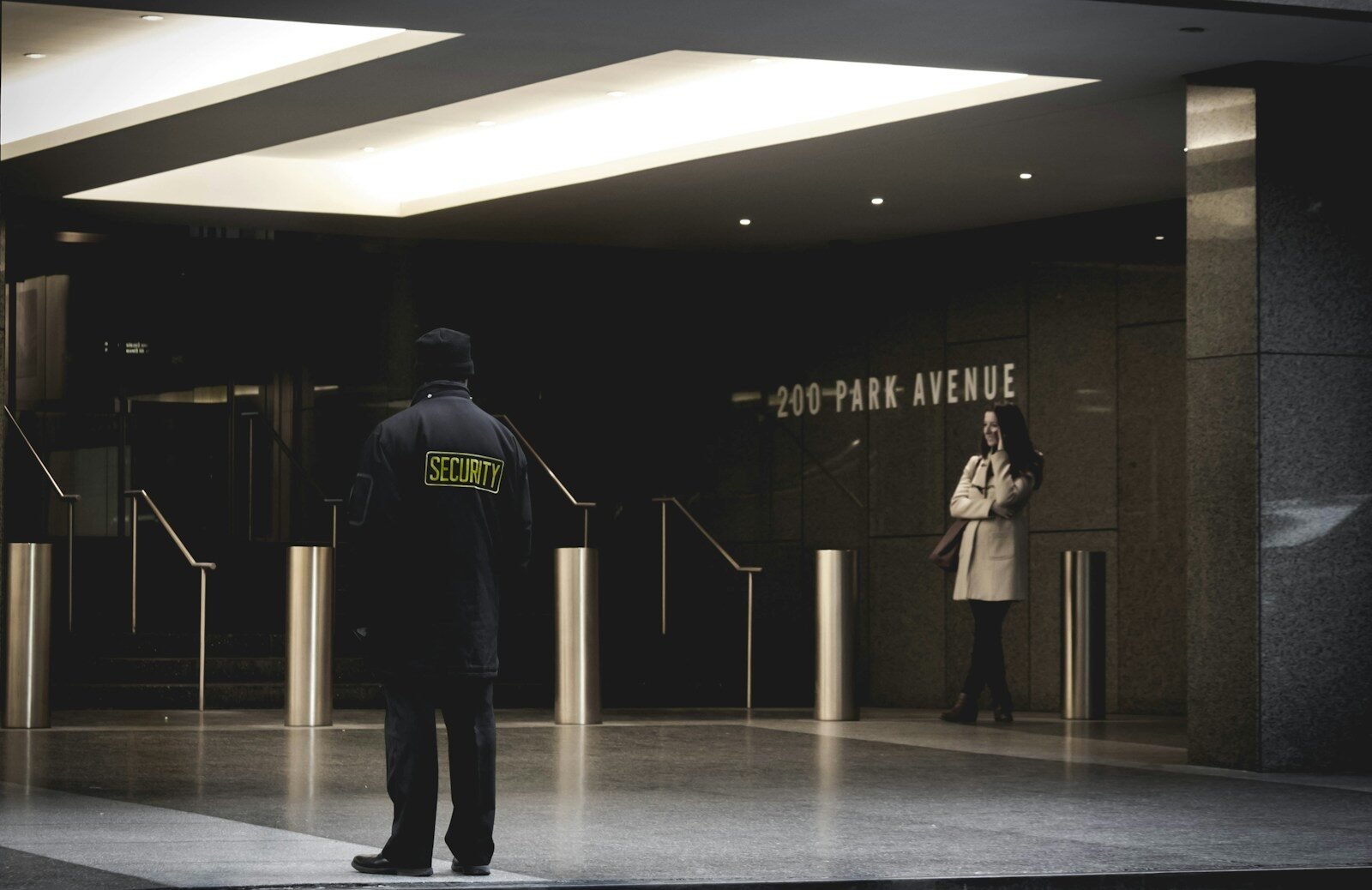
Static security guards (often called dedicated or stationary guards) are assigned to remain at a single, fixed location throughout their entire shift.
You see static guards stationed at front desks, lobby entrances, security gates, or high-value access points. While they may perform routine foot patrols around the immediate building, their main role is to maintain a continuous, uninterrupted physical presence at one designated site.
Features of Static Security
- Constant Presence: A guard is physically on-site every single minute of their scheduled shift.
- Access Control & Visitor Management: Officers verify credentials, sign in guests, issue badges, and manage incoming and outgoing deliveries.
- Immediate On-Site Action: If an incident occurs, a static guard is already on the premises to address the issue immediately.
- Customer Service Integration: Static guards often double as greeters, answering basic visitor questions and monitoring front-desk activities.
Choosing the Right Option for Your Property
Choosing between mobile patrols and static guards comes down to understanding your site’s specific physical footprint, operating hours, and inherent risks. Performing a structured security risk assessment is the best starting point.
When Mobile Patrol Security Is Best
Mobile patrols are ideal for properties that do not require continuous visitor monitoring, but still need regular checks to deter crime.
- Large Commercial & Industrial Complexes: Sprawling warehouses, auto dealerships, and logistics hubs benefit from mobile guards who can cover expansive driveways and outdoor storage yards quickly in a vehicle.
- Construction Sites & Vacant Properties: Unoccupied properties are prime targets for theft, squatting, and copper wire scavenging. Random mobile checks after business hours disrupt potential intrusions at a manageable cost.
- Budget-Conscious Properties: Small businesses or commercial plazas that need basic crime prevention but cannot justify the expense of a full-time, dedicated guard usually find mobile patrols to be the most practical solution.
- Nighttime Security Checks: Sites that only need basic lock-ups, door checks, and perimeter checks between dusk and dawn.
When Static Security Guards Are Best
Static guards are necessary when direct human oversight, immediate decision-making, or visitor management is critical to daily operations.
- High-Traffic Corporate Lobbies & Residential High-Rises: Properties requiring front-desk monitoring, ID verification, or package tracking need a continuous human presence.
- Retail Outlets & Shopping Centers: High-value retail environments rely on static guards to deter shoplifting, manage crowd flow, and respond instantly to unruly visitors.
- Critical Infrastructure & Restricted Facilities: Data centers, healthcare facilities, and manufacturing plants need strict, uninterrupted access control at primary entry doors and gates.
- High-Risk Environments: Locations with a history of frequent trespass or valuable inventory require a dedicated guard to manage emergencies immediately.
Conclusion
Securing your property requires balancing your operational needs with your financial reality.
Choose mobile patrol security if you manage a sprawling footprint, need flexible after-hours checks, or want reliable coverage on a tighter budget.
Choose static security guards if your daily operations depend on uninterrupted access control, visitor screening, and immediate, on-site emergency response.
Every property has unique security requirements, so selecting the right solution is essential for long-term protection and peace of mind. Black Panther Security offers professional mobile patrol and static guard services for your specific needs. We help safeguard your people, property, and assets with reliable, responsive security solutions.
Frequently Asked Questions (FAQs)
1. What is the difference between mobile patrol security and static security guards?
Mobile patrol security involves guards conducting scheduled or random patrols across one or multiple properties using vehicles or on-foot inspections. Static security guards remain at a fixed location throughout their shift, providing continuous monitoring and immediate on-site response to incidents.
2. Is mobile patrol security suitable for small businesses?
Yes. Mobile patrol security is an excellent option for small businesses that need regular security checks without the cost of hiring a full-time guard. It provides visible crime deterrence, perimeter inspections, and rapid response while remaining a cost-effective security solution.
3. Which type of security is better for construction sites?
Mobile patrol security is often the preferred choice for construction sites because it allows guards to monitor large areas, perform random patrols, inspect equipment and materials, and deter theft or vandalism outside working hours. However, high-risk sites may also benefit from dedicated static security guards.
4. When should I hire static security guards instead of mobile patrols?
Static security guards are the better choice when your property requires continuous supervision, visitor management, access control, or an immediate on-site response. They are commonly used at corporate offices, retail stores, residential communities, healthcare facilities, and other high-security locations.
5. Can businesses combine mobile patrol security and static guards?
Yes. Many businesses use a combination of both services to achieve comprehensive protection. Static guards manage entrances, monitor visitors, and provide constant on-site security, while mobile patrol officers conduct perimeter checks, inspect larger outdoor areas, and respond quickly to security incidents across the property.