
Retail Crime Networks vs. Shoplifting: What’s the Difference?
When people think of theft in a store, they usually picture an individual slipping an item into a jacket or pocket and walking out without paying. While simple shoplifting remains a daily challenge for store owners, a much larger and more dangerous threat has reshaped the retail landscape: organized retail crime networks.
Understanding the distinction between opportunistic shoplifting and large-scale criminal operations is crucial for business owners, property managers, and loss prevention teams. The strategies used to combat an individual opportunist will not stop a coordinated ring designed to systematically strip store shelves.
This guide breaks down the core differences between simple shoplifting and criminal networks, explaining how modern retail store security and specialized physical defenses protect businesses from massive financial losses.
What Is Simple Shoplifting?
Simple shoplifting is typically an opportunistic, low-level crime committed by an individual acting alone. The primary motivation is usually personal use, personal consumption, or immediate financial gain on a small scale.
Key Characteristics of Shoplifting
- Individual Action: The perpetrator acts independently without pre-planned logistical support, getaway teams, or professional fencing connections.
- Low Volume: The offender typically steals one or two items that are easy to conceal, such as cosmetics, clothing, or small electronics.
- Low Sophistication: Shoplifters rarely use specialized tools or coordinated distraction tactics. They rely primarily on brief moments of staff distraction or unmonitored aisles.
- Impulsive Behavior: Many shoplifting incidents are unplanned decisions made while browsing inside the store.
While shoplifting causes steady inventory loss over time, standard loss prevention techniques such as customer service greeting, visible security mirrors, basic tag alarms, and employee presence are often enough to deter most casual offenders.
What Is Organized Retail Crime (ORC)?
Organized retail crime refers to professional criminal rings that systematically steal high-value merchandise from retail establishments to resell those goods through illegal fencing networks, online marketplaces, or pawn shops for profit.
Key Characteristics of Organized Retail Crime
- Coordinated Team Operations: ORC rings operate like structured businesses. They deploy specialized teams, including “boosters” who steal the goods, “mules” who transport inventory, and “fencers” who clear and resell stolen products online.
- High-Volume Theft (Shelf Sweeping): Rather than taking a single item, ORC teams clear entire display racks, shelves, or stockrooms within seconds, taking dozens or hundreds of items in a single run.
- Advanced Tools and Tactics: Criminal networks use booster bags (foil-lined bags designed to bypass electronic alarm gates), magnetic tag detachers, signal jammers, and planned getaway vehicles parked at store exits.
- Potential for Aggression: Members of criminal rings are often instructed to move fast and may use physical force, threats, or weapons if confronted by floor staff, creating serious safety risks for employees and shoppers.
Key Differences Between Shoplifting and Organized Retail Crime
Comparing these two forms of theft side-by-side highlights how different their scale and operational methods really are:
- Primary Motivation: Simple shoplifting is driven by personal use or quick cash, whereas organized retail crime is driven by large-scale commercial resale and ongoing criminal profit.
- Number of Offenders: Shoplifting usually involves a single individual acting alone, while criminal networks deploy coordinated teams with distinct roles, such as boosters, getaway drivers, and fencers.
- Volume Stolen: Individual shoplifters conceal one or two items in clothing or personal bags. Criminal networks perform mass “shelf-sweeping” to clear out entire high-value product displays.
- Tactics and Tools: Shoplifting relies on quick opportunity and basic concealment. Retail crime rings utilize foil-lined booster bags, specialized tag-detaching tools, synchronized distraction tactics, and potential violence.
- Financial Impact per Incident: A typical shoplifting incident results in a small financial loss (ranging from $20 to $200). An organized crime sweep can cost a store anywhere from $2,000 to over $50,000 in under two minutes.
- Effective Defense Strategy: Standard shoplifting can be reduced using mirrors, attentive staff greeting, and standard tags. Stopping crime rings requires dedicated physical guards, real-time camera analytics, and time-delay display locks.
Financial and Operational Impact on Businesses
The financial difference between shoplifting and criminal networks is massive. While a shoplifter causes localized shrink, a single sweep by an organized crime ring can disrupt an entire store’s inventory pipeline.
The Broader Impact of Organized Retail Crime
- Supply Chain Disruptions: Mass theft leaves store shelves completely bare, disrupting inventory forecasting, reordering systems, and store sales.
- Increased Insurance and Operating Costs: Repeated high-value losses lead to skyrocketing commercial insurance premiums, forced price increases for honest consumers, and early store closures.
- Employee Safety and Morale: Staff members working in environments targeted by aggressive crime rings face heightened stress, safety concerns, and potential physical danger during active incidents.
Modern Solutions for Retail Theft Prevention
Because organized networks operate with high speed and coordination, traditional security measures are insufficient. Effective retail theft prevention requires a multi-layered approach combining technology, physical security staff, and real-time monitoring.
Effective Defense Strategies for Retailers
Implementing comprehensive security measures helps protect inventory and maintain a safe environment:
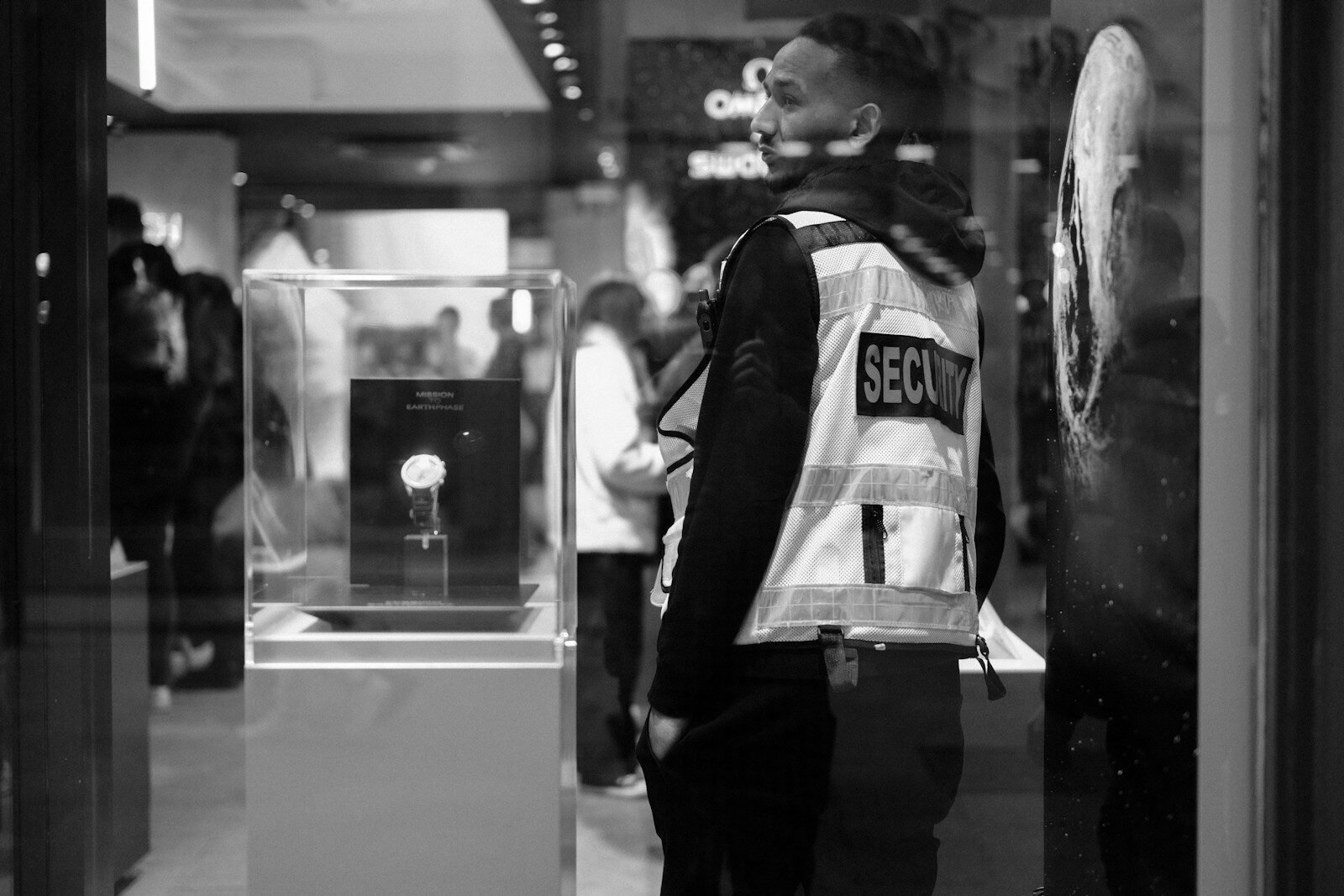
- Visible Professional Guarding: Stationing uniformed guards near store entrances and high-value aisles creates an immediate physical barrier that deters professional crime rings from targeting your location.
- Advanced Surveillance & AI Analytics: Utilizing smart cameras equipped with gesture detection and license plate recognition helps identify repeat ORC vehicles and flagged individuals before they enter the building.
- Smart Display Fixtures: Installing time-delay display locks, smart display cases, and shelf-sweeping alarms prevents thieves from clearing entire fixture racks instantly.
- Partnering with Commercial Security Services: Working with specialized security providers ensures your store benefits from trained guards, emergency response plans, and active threat management tailored to your retail layout.
Practical Checklist for Securing Your Store
Use this quick checklist to assess whether your store is prepared to handle both shoplifting and organized criminal rings:
- Audit perimeter entrances, backrooms, and high-value display aisles to eliminate blind spots.
- Secure high-value inventory using smart tags, locked display cases, or benefit-denial security tags.
- Train employees never to physically confront aggressive thieves or engage with professional crime rings.
- Deploy visible guard personnel through established commercial security services during peak operating hours.
- Partner with local loss prevention networks and police departments to share information on regional ORC rings.
Conclusion
Distinguishing between casual shoplifting and professional crime rings is essential for building an effective defense strategy. While basic deterrence tools can reduce simple shoplifting, stopping organized networks requires proactive planning, smart technology, and expert physical security.
By investing in multi-layered retail store security, implementing structured retail theft prevention protocols, and partnering with experienced commercial security services, store owners can safeguard inventory, protect employees, and maintain a profitable retail business.
Frequently Asked Questions (FAQs)
1. What is the main difference between organized retail crime and shoplifting?
Simple shoplifting involves an individual taking items for personal use or quick cash. Organized retail crime involves structured rings that systematically steal large quantities of high-value goods to resell for significant profit.
2. How do booster bags work in retail theft?
Booster bags are shopping bags or coats lined with aluminum foil or special shielding materials. Criminals use them to block the radio frequency signals emitted by security tags, allowing them to carry stolen items past door alarm pedestals without triggering an alert.
3. Why shouldn’t retail employees confront suspected members of a crime ring?
Members of organized crime rings are often instructed to escape at all costs and may carry weapons or use physical force. Confronting them creates severe physical safety risks for employees and customers.
4. How does professional retail store security help stop organized crime rings?
Visible guard officers act as a powerful physical deterrent, manage access points, coordinate directly with law enforcement, and intervene safely to protect staff and inventory during high-risk incidents.
5. What industries are most targeted by organized retail crime?
ORC rings frequently target stores selling high-value, easily resalable items such as designer apparel, cosmetics, electronics, over-the-counter pharmaceuticals, baby formula, and power tools.